Sol: The proven portable solar lamp for humanitarian aid, emergency preparedness & off-grid contexts
Explore how Sol, BRIGHT’s next-generation solar lamp, is performing in humanitarian response, emergency preparedness, transitional housing and off-grid contexts around the world.
All articles
-
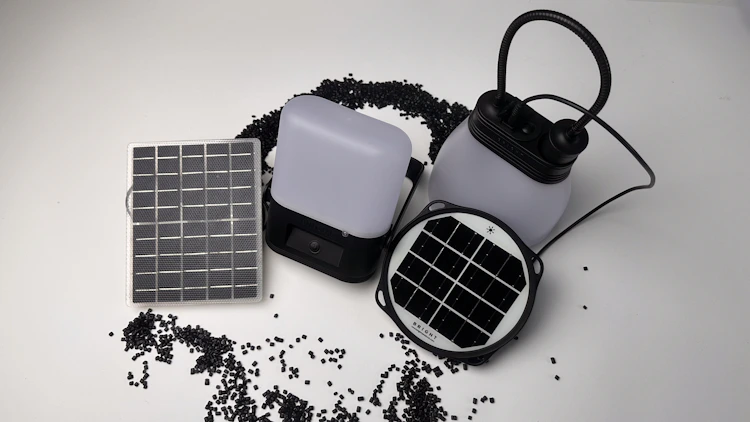
![Image of the upgraded SunBell 2.0Y solar panel made with 100% post-consumer recycled (PCR) plastic and the Sol solar lamp with the new, lighter and more efficient monocrystalline solar panel using Ethylene Tetrafluoroethylene (ETFE) plastic. Two latest innovations showcasing BRIGHT's approach to using circular product design to tackkle plastic pollution]()
- Insights
Tackling plastic pollution through circular product design, BRIGHT’s approach
The United Nations Environment Programme (UNEP) estimates that globally more than 400 million tonnes of plastic is produced annually. Half is used once and discarded, with less than 10% recycled. Around 11 million tonnes end up in water bodies annually, imposing a global environmental and social cost of between US$300 billion to US$600 billion.
Read more
-
![BRIGHT solar lamp for emergencies glowing in a dark indoor space, ideal for emergency kits during power outages or severe weather.]()
- Insights
- Emergency Preparedness
How to choose the best solar lamp for emergencies
Power outages are a predictable feature of modern crises. Storms, floods and grid failures often cut electricity when it is needed most. For governments, aid agencies and households, a dependable solar lamp has become an essential part of emergency preparedness. The right lamp can provide safety, light critical spaces and keep basic communication running when the power goes out.
Read more
-
![BRIGHT designs solar lamps to provide light that balances brightness and colour temperature]()
- Insights
Lighting the way: How BRIGHT designs solar lamps for comfort & efficiency
Behind every solar lamp we create lies a critical design philosophy: real-world use must shape technical choices. The light emitting diodes (LEDs) in our solar lights are meticulously engineered to provide optimal brightness and appropriate colour temperature. Explore how we choose brightness and colour temperature in our solar lamps, and why those decisions matter for the people we serve.
Read more
-
![Humanitarian NGOs are switching to solar power in crisis zones ditching diesel generators for solar panels]()
- Insights
Why NGOs are switching to solar power in crisis zones
For years humanitarian aid operations have relied on diesel generators, which are costly, logistically complex, and environmentally damaging, as the main source of power in operations. Now, a growing number of humanitarian NGOs are replacing these machines with solar power or solar photovoltaic (PV) systems. Why? Because solar energy offers a better way forward: it is more sustainable, more affordable over time, and easier to deploy in hard-to-reach areas.
Read more